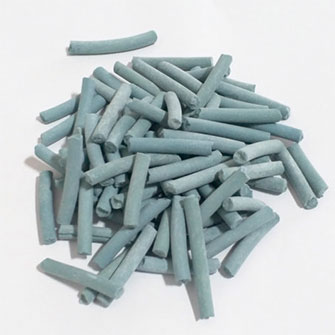
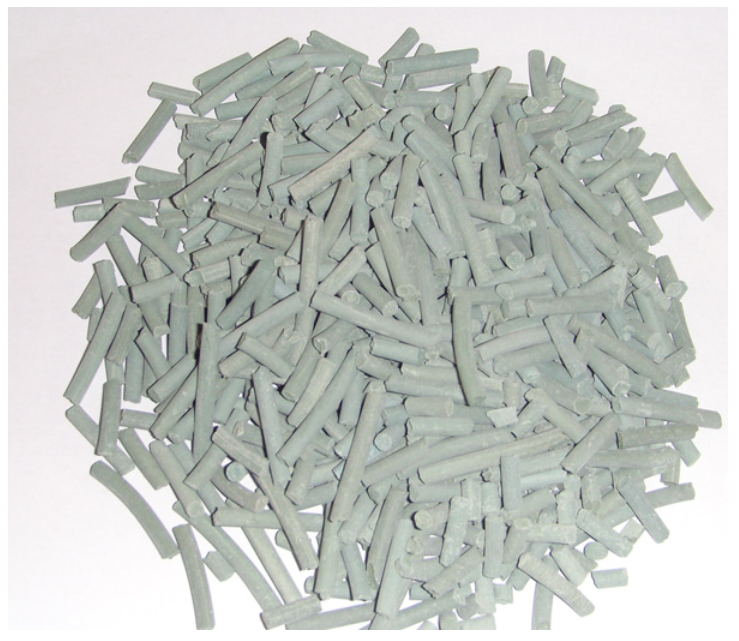
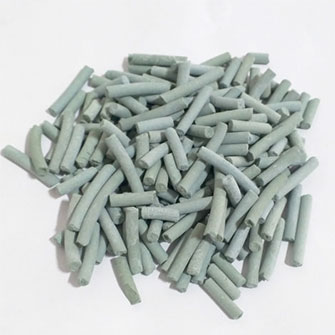
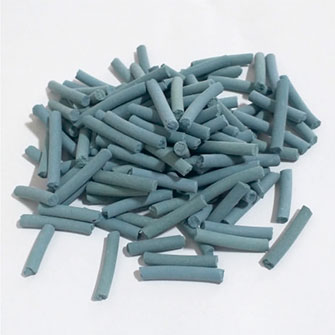
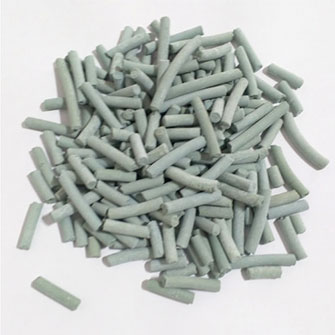
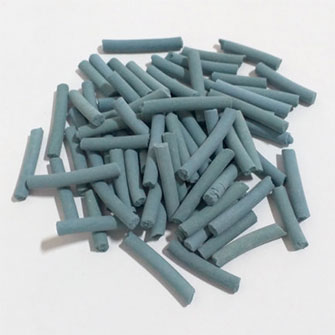
KC-102
is a Co-Mo-based sulfur-resistant CO-shift catalyst with the special carrier and new assistant agent, suitable
for medium-pressure CO-shift processes of heavy oil, residual oil and coal.
Particularly, it shows its great advantages in the low-temperature or low
water-gas ratio shift processes of coal.
The active
components of the KC-102 catalyst are the oxidation state of Co and Mo, which need
to be sulfurized at the process start-up stage by using sulfur-containing
process gas or sulfurizing reagent. During the sulfurization stage, only a
small amount of water will be produced and discharged along with the process
gas without generating any harmful chemicals.
Technical
Features:
- High mechanical strength and strength
stability
- High catalytic activity, especially for
low-temperature or low water-gas ratio shift processes.
- Excellent selectivity and active stability
- High operating flexibility, with the adaptive
capacity for high airspeed and wide water-gas ratio
- Long working life and renewable.
Working
Conditions:
- Temperature: 180 -
480℃
- Pressure: 1.0 – 5.0
MPa
- Airspeed: 1000 -
6500h-1 (dry gas base)
- Water-gas ratio: 0.1
– 1.0
- Sulfur content:
≥0.005%(V/V) at low water-gas ratio
Physical
and Chemical Properties:
|
Properties
|
Configuration 1
|
Configuration 2
|
|
Colour
|
Grey-green
or blue-green
|
Grey-green
or blue-green
|
|
Configuration
|
Strip
style
|
Small
particle
|
|
Reactor
|
Axial
shift reactor
|
Axial-radial
or isothermal shift reactors
|
|
Dimensions
(mm)
|
D
3.5 – 4.5
L
8.0 – 15.0
|
D
2.0 – 3.0
L
3.0 – 6.0
|
|
Bulk
Density (kg/m3)
|
750
- 950
|
850
- 1000
|
|
Crushing
Strength (N/cm)
|
≥130
(avg)
|
≥130
(avg)
|
|
Specific
Surface Area (m2/g)
|
≥100
(before
sulfurization)
|
≥100
(before
sulfurization)
|
|
Pore
Volume (ml/g)
|
≥0.28
(before
sulfurization)
|
≥0.28
(before
sulfurization)
|
Catalyst
dimensions can be adjusted based upon customer’s requirement, which may affect
its bulk density and the bed pressure drop.