KC-401
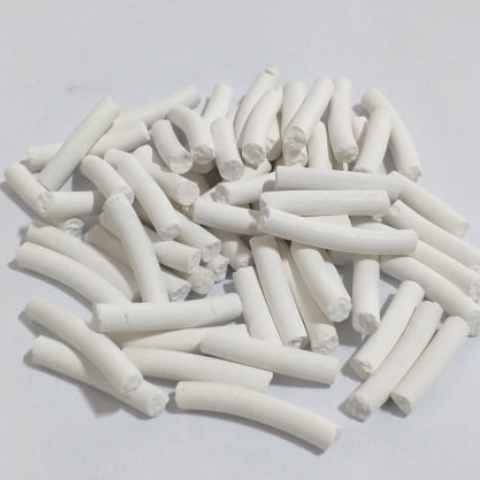
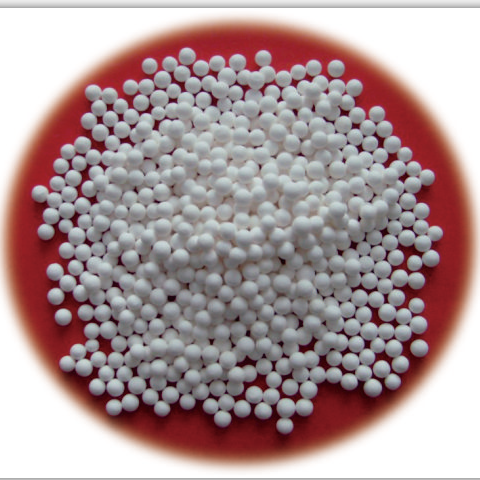
KC-401 catalyst is defined as a sulfur recovery catalyst for the Claus reaction with the carrier of Al2O3.
READ MORE


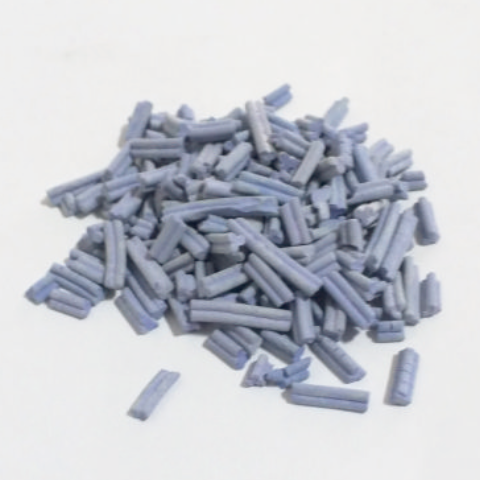
KC-403 catalyst is specialized for Claus exhaust hydrogenation with its carrier of γ-Al2O3 and active components of Co and Mo. KC-403 is featured for its low bulk density, large pore volume & specific surface area, superior dispersion of the active phase, high activity of hydrogenation and organic sulfur hydrolysis, excellent activity stability, etc.
KC-403 catalyst is specialized for Claus exhaust hydrogenation with its carrier of γ-Al2O3 and active components of Co and Mo. KC-403 is featured for its low bulk density, large pore volume & specific surface area, superior dispersion of the active phase, high activity of hydrogenation and organic sulfur hydrolysis, excellent activity stability, etc.
Technical Features:
- High mechanical strength and strength stability.
- Outstanding hydrogenating and organic sulfur hydrolyzing abilities
- Excellent selectivity and active stability.
- High operating flexibility, with the adaptive capacity for high airspeed.
- Long working life.
Physical and Chemical Properties:
|
Colour |
Blue grey |
|
Configuration |
Three-leave
clover or Sphere |
|
CoO% (m/m) |
≥2.5 |
|
MoO3
(m/m) |
≥9.0 |
|
Specific
Surface Area (m2/g) |
≥200 |
|
Pore
Volume (ml/g) |
≥0.35 |
|
Bulk
Density (kg/m3) |
650
– 750 |
|
Crushing
Strength (N/cm) |
≥130
(avg) |
Direction for Use:
The catalyst active components of Co and Mo existing in the form of the oxidation state need to be sulfurized before in use. During the sulfurization stage, the inlet temperature initially increases at a rate of 20-30℃/h to 120℃. Until the system is stabilized (this takes about 2 hrs), the temperature continues increasing till 200℃, where the operating conditions in the Clause unit are required to be adjusted to make (H2S+COS)/SO2 ratio between 4 and 6. At the same time, the H2 content in the flue gas is ensured to be 3-5% at the entrance of the reactor until the sulfurization is finished. The sulfurization temperature is controlled between 200 and 260℃.
After the catalyst sulfurization, increase the
bed temperature to 300℃ and adjust the (H2S+COS)/SO2
ratio to 2:1. The inlet temperature is normally controlled at 300℃